
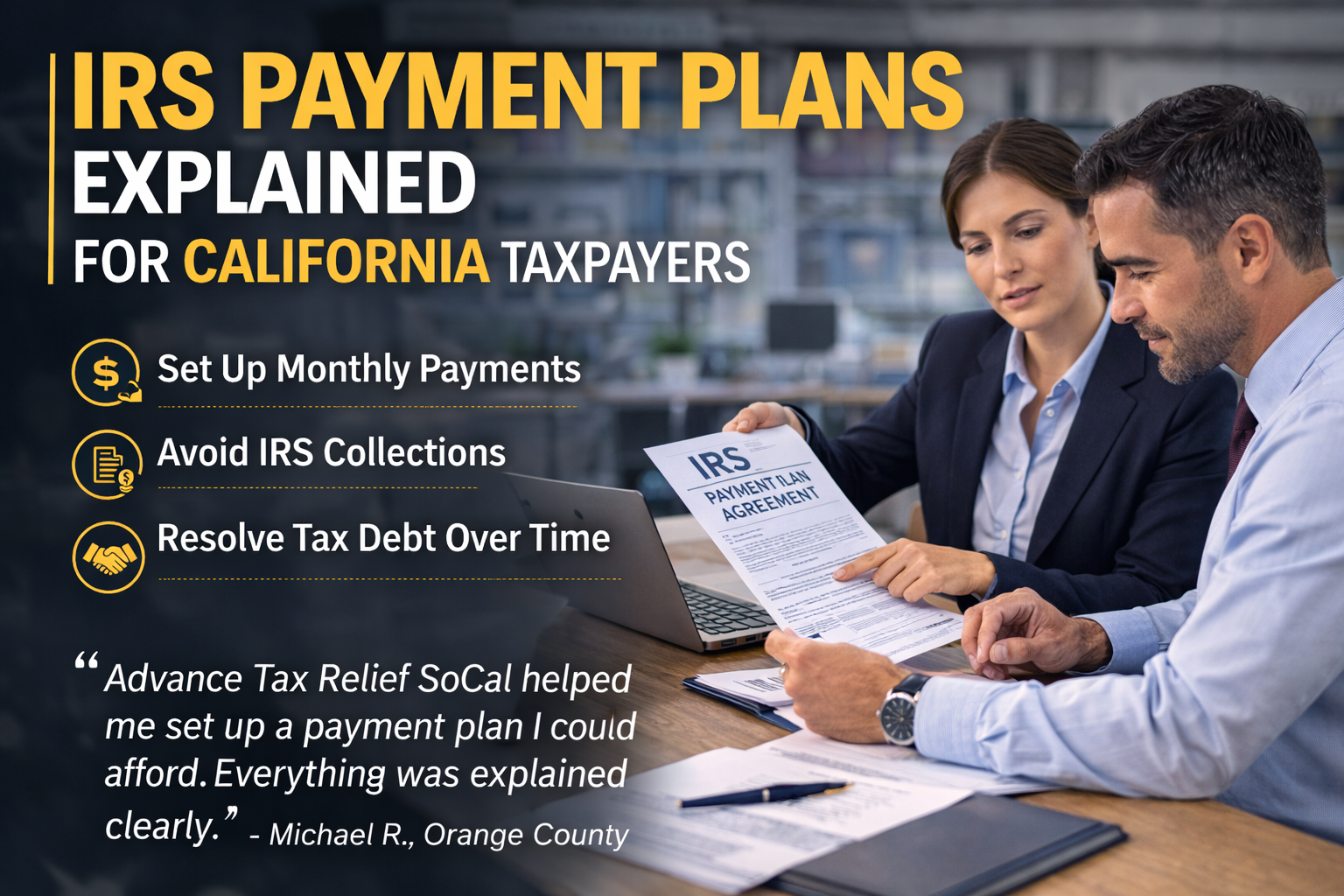
Many California taxpayers fall behind on taxes at some point in their lives. Unexpected business losses, medical emergencies, divorce, economic downturns, or simply not setting aside enough money for taxes can quickly lead to an IRS balance that feels overwhelming. For self-employed individuals, freelancers, and small business owners, this situation is even more common because taxes are not automatically withheld from income.
When a tax bill arrives and the balance cannot be paid in full, many people feel stuck or unsure about what to do next. The good news is that the IRS offers several programs designed to help taxpayers resolve their balance over time. One of the most common and practical solutions is an IRS payment plan, also known as an Installment Agreement.
For many California taxpayers, an IRS payment plan offers a structured and manageable path forward. Instead of facing immediate payment demands or aggressive collection actions, taxpayers can work with the IRS to gradually pay down their tax balance while remaining compliant with federal tax laws.
An IRS Installment Agreement allows taxpayers to make monthly payments toward their tax debt instead of paying the entire balance upfront. Once approved, the taxpayer agrees to make scheduled payments until the total amount owed—including interest and penalties—is paid off.
This option is frequently used by taxpayers who owe anywhere from $10,000 to $100,000 or more but do not have the financial ability to pay the balance in a lump sum.
Understanding how IRS payment plans work can help taxpayers avoid unnecessary stress and make informed decisions about resolving their tax obligations.
The IRS currently offers several types of payment plans depending on the taxpayer’s financial situation.
Short-term payment plans are designed for taxpayers who can pay their balance within 180 days. These plans are typically used when the taxpayer simply needs extra time to gather funds or liquidate assets.
Long-term installment agreements are more common. These plans allow taxpayers to make monthly payments over a longer period of time. The IRS determines the payment amount by reviewing financial information such as income, living expenses, assets, and total tax debt.
For many individuals and businesses, long-term installment agreements provide the flexibility needed to gradually resolve their tax balance without creating severe financial hardship.
However, approval for an IRS payment plan requires several important conditions.
Before the IRS will approve an installment agreement, taxpayers must ensure that all required tax returns have been filed. If multiple years of tax returns remain unfiled, the IRS will usually require those returns to be completed first.
This is one of the most common situations professionals encounter when assisting taxpayers with IRS debt.
Once all returns are filed, the IRS evaluates factors such as:
• total tax balance owed
• income and employment status
• monthly living expenses
• asset ownership
• overall financial ability to pay
If the IRS determines that the taxpayer cannot pay the balance in full immediately but has the ability to make monthly payments, an installment agreement may be approved.
There are several common reasons why California taxpayers request IRS payment plans.
These include:
• back taxes from previous years
• unexpected tax bills from self-employment income
• penalties and interest increasing the original balance
• missed estimated tax payments for contractors
• financial hardship after job loss or business downturns
While installment agreements allow taxpayers to pay their balance over time, it is important to understand that interest and certain penalties may continue to accrue until the balance is fully paid.
However, establishing a payment arrangement often prevents the IRS from taking more serious collection actions.
Without a resolution in place, the IRS may eventually take enforcement actions such as:
• wage garnishments
• bank account levies
• federal tax liens
• seizure of assets in extreme situations
Entering into an IRS payment plan demonstrates a good-faith effort to resolve the balance and can often stop or prevent these enforcement actions.
It is also important to understand that installment agreements are not the only solution available to taxpayers. Depending on financial circumstances, some individuals may qualify for additional IRS relief programs.
For example, some taxpayers may qualify for an Offer in Compromise, which allows the IRS to settle tax debt for less than the full balance if the taxpayer can demonstrate financial hardship.
Others may qualify for penalty abatement, which can reduce the total amount owed by removing certain penalties.
In cases involving severe financial hardship, the IRS may temporarily suspend collections through a status known as Currently Not Collectible.
Determining the best option requires a careful review of income, assets, and financial obligations.
One of the biggest mistakes taxpayers make is waiting too long to address IRS problems. Many people ignore IRS notices because they feel overwhelmed or uncertain about what steps to take.
Unfortunately, delaying action often causes the situation to worsen as penalties, interest, and collection efforts continue to increase.
Taking action early can often prevent serious enforcement actions and provide more options for resolving tax debt.
For many taxpayers in California, understanding IRS payment plans is the first step toward resolving their tax situation and regaining financial stability.
Client Review
“After years of dealing with IRS letters and not knowing what to do, I finally reached out to Advance Tax Relief SoCal. Their team reviewed my situation, explained my options clearly, and helped me set up a payment plan that I could actually afford. The process was professional, transparent, and far less stressful than I expected. I finally feel like I have control of my tax situation again.”
— Michael R., Orange County
Strong Call to Action
If you owe the IRS money and feel overwhelmed by your tax balance, you are not alone. Many California taxpayers qualify for IRS payment plans or other resolution programs that can help reduce stress and create a manageable path forward.
Advance Tax Relief SoCal works with individuals, self-employed professionals, and small business owners across California to resolve IRS tax problems and negotiate practical solutions.
If you owe $25,000 or more in back taxes, now is the time to take action before penalties and collections continue to grow.
Call Advance Tax Relief SoCal today to schedule a confidential consultation and learn what options may be available for your situation.
Advance Tax Relief SoCal
Orange, California
(714) 927-0038
Frequently Asked Questions
What is the minimum payment for an IRS payment plan?
The minimum payment depends on the total balance owed and the taxpayer’s financial situation. The IRS typically reviews income and living expenses before determining an acceptable monthly payment amount.
Can the IRS reject a payment plan request?
Yes. The IRS may reject a request if tax returns are missing, financial information is incomplete, or the proposed payment amount does not meet IRS guidelines.
Will the IRS stop collections if I set up a payment plan?
In many cases, establishing an installment agreement can stop aggressive collection actions such as wage garnishments or bank levies, provided the taxpayer remains compliant with the agreement.
How long can IRS payment plans last?
Some installment agreements may last several years depending on the amount owed and the taxpayer’s ability to pay.
Do I still need to file taxes while on a payment plan?
Yes. Taxpayers must remain compliant and file all future tax returns on time while making payments according to the agreement.
Leave a Reply